How can existing office buildings remain competitive, and what does an efficient workplace mean today? These were the questions explored by the speakers at the ROFMA event, from the perspective of Property Management and Facility Management specialists, as well as owners, tenants and real estate consultants.
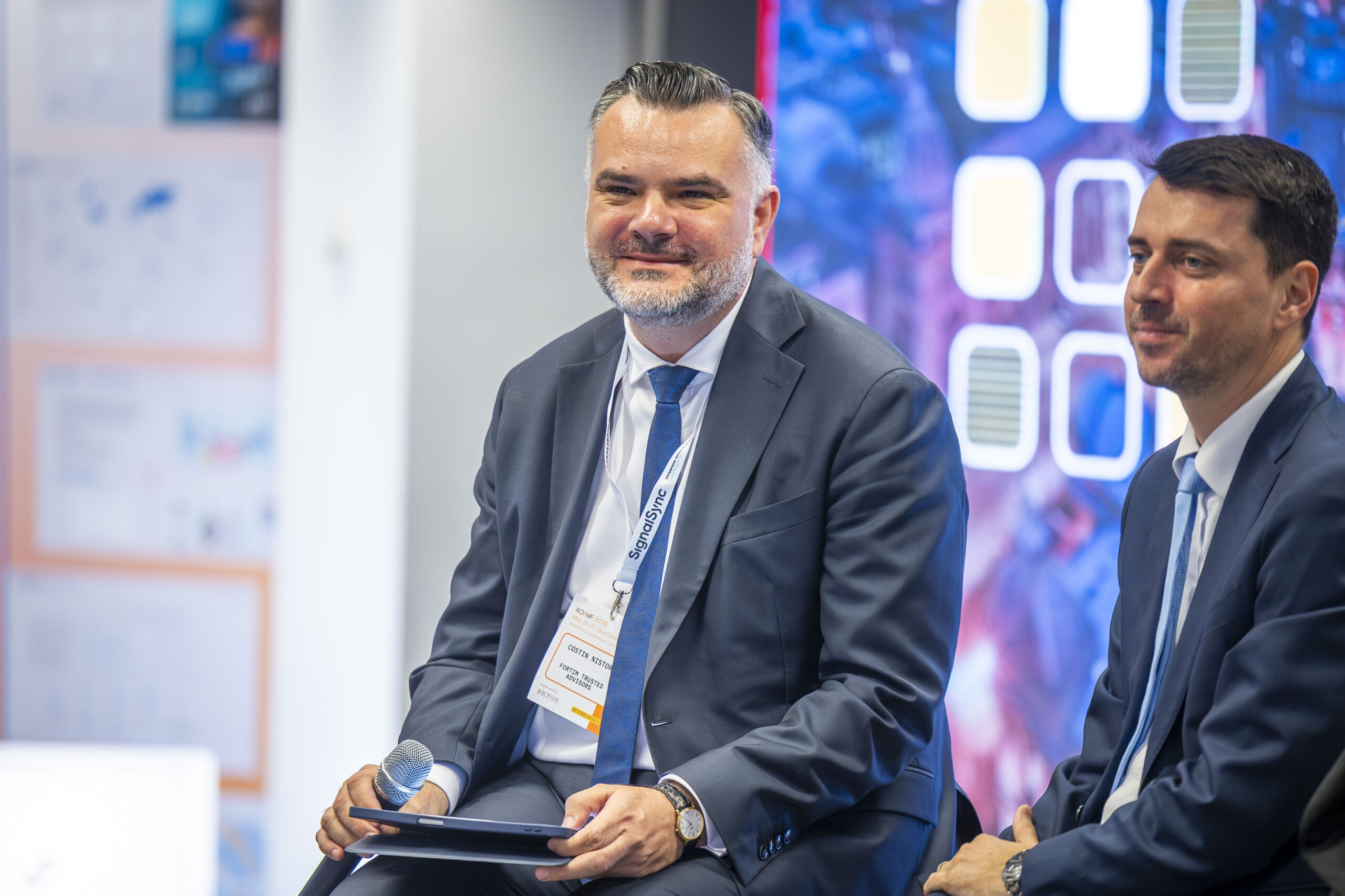
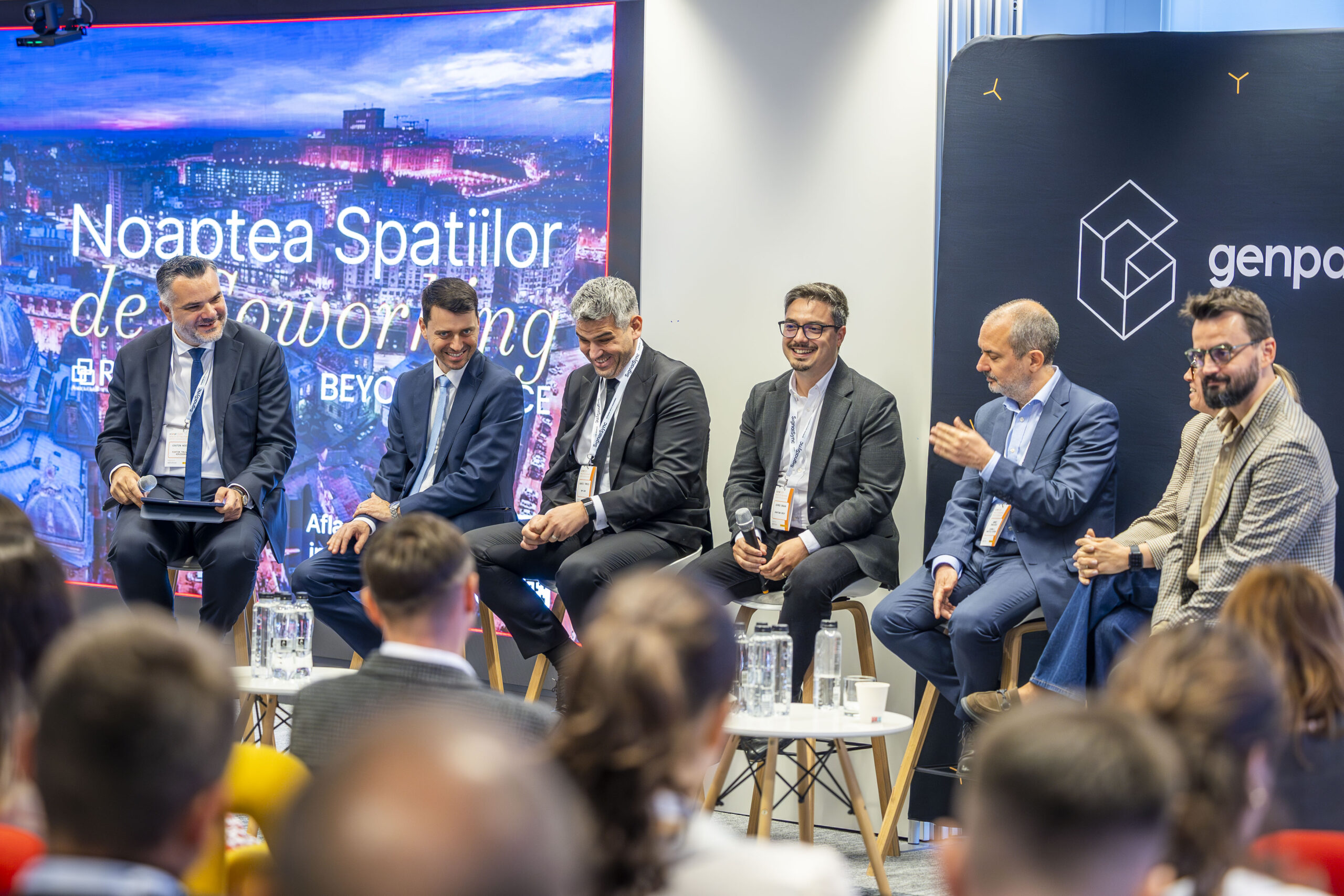
Moderated by Costin Nistor, Managing Director of Fortim Trusted Advisors and President of the Property Management section within ROFMA, the panel “Workplace Transformation & Adaptive Reuse: Aligning Design, Ownership, and Operations”, held during Romanian Workplace Management Forum ROWMF 2026, focused on how the modernization of existing buildings and the transformation of workspaces can respond to the new demands of both tenants and owners.
The office market is going through a shift in priorities, driven by cost pressure. If in the past competition centered around location and striking design, today the conversation is far more pragmatic and focused on space efficiency and facilities tailored to different user categories.
More and more companies are evaluating how well a space performs in day-to-day use and how effectively it meets the real needs of employees and the business.
As moderator of the panel, Costin Nistor introduced the topic of the difference between a space that looks good at handover and one that works well in daily use: flexibility, comfort, collaboration, efficiency, employee experience and total cost of occupancy.
The debate featured George Drăgan, CEO of Smartown Group; Radu Tar, Head of Workplaces and Construction at Coral Companies; Corina Croitoru, VP Global Real Estate at Deutsche Bank; Andrei Postelnicu, Managing Director South Europe at CBRE GWS EMEA; Gabriel Tomescu, CEO of BMF Group; and Andrei Ianculescu, Head of Project Management Department at Cushman & Wakefield Echinox. They brought perspectives from real estate consultancy, development, workplace management, construction and corporate portfolio management.
What do tenants want?
Corina Croitoru, VP Global Real Estate at Deutsche Bank, estimated that in the coming period there will be a stronger focus on collaboration in the workplace and on building communities around the office. At the same time, companies will continue encouraging employees to return to the office in larger numbers, which will put pressure on the quality of the experience offered by buildings. Workspaces need to become more attractive, more flexible and better connected to people’s needs, so that the office is seen as useful and relevant, not just as an obligation.
This shift completely redefines the criteria by which office space is evaluated. Common areas, informal meeting spaces, layout flexibility and technology integration are becoming essential elements for tenant retention and higher occupancy.
New building or refurbishment?
An important question raised during the debate was how existing office buildings can remain competitive in a market undergoing rapid change and facing a growing pipeline of new developments. The general conclusion was that modernization does not always mean full reconstruction. In many cases, smart adaptation and functional repositioning can deliver very good results and significantly extend the lifespan of an asset.
New design should not be only an aesthetic change, but also a point of attraction grounded in a solid understanding of the tenant’s needs and of how office space functions, noted architect Anda Manu, Office Designer & Leading Architect, Founder of AMA Design, from the audience.
Daniel Drăgan, representing an office building owner, emphasized the importance of a balanced tenant mix and the need to adapt spaces to new types of demand. One concrete example is the integration of car showrooms into office buildings, a sign that commercial uses are becoming increasingly diverse and flexible. Owners are forced to find solutions that allow buildings to accommodate different functions and respond more quickly to market shifts.
In turn, Gabriel Tomescu, CEO of BMF Group, argued in favor of functionality both during the construction stage and during renovation. He pointed out that almost all old buildings can be renovated and brought back into the market, although there are major challenges in the case of spaces designed according to outdated models. “Mausoleum-type” spaces, dominated by marble and rigid compartmentalization, such as former CEC Bank or Romanian Post headquarters, are difficult examples to convert and adapt to current tenant needs.
The main takeaway from the discussion was that structural flexibility and adaptability matter more than rigid luxury or spectacular but impractical solutions. Companies today are looking for spaces that work efficiently, allow quick reconfiguration and support collaboration and employee productivity.
Compared with five or ten years ago, tenant priorities have changed significantly. While in the past the focus was on image, size and rent level, today companies look much more closely at how efficiently space is used, employee comfort, indoor air quality, collaboration areas, spaces for individual focus, technology integration, and the total cost of occupancy and operation. In practice, an efficient space is not necessarily the most visually impressive one, but the one that performs well in everyday use and can evolve together with the organization.
Another central topic of the debate was sustainability and energy performance. Participants emphasized that operational efficiency directly affects an asset’s competitiveness. Energy costs, ESG standards and the pressure from international companies for sustainable spaces are becoming increasingly important, as pointed out by a representative of a real estate company.
As a result, investments in upgrading installations, automation, lower consumption and operational optimization are no longer just image-driven measures. They are factors that directly influence occupancy and the long-term value of an asset.
Representatives of real estate consultancy firms also discussed one of the most sensitive topics of the moment: the balance between profitability and delivering products that are genuinely good for the market. In the context of high construction and financing costs, the pressure for returns is very strong. At the same time, tenants are more attentive than ever to the quality of the experience offered by the space.
This balance is becoming harder and harder to maintain, and the difference between projects that will remain relevant and those that will lose their appeal will be determined by owners’ ability to invest intelligently and in line with users’ real needs.
Why is it sometimes more profitable to buy an old building and renovate it than to build one from scratch? Because construction costs 10–20 years ago were much lower than they are today, and current costs continue to rise, Costin Nistor pointed out.
The direction of the market seems increasingly clear: the office buildings that will perform in the years ahead will not necessarily be the newest or the most spectacular, but those that manage to combine space efficiency, flexibility of use, employee comfort, collaboration, community and sustainability, while keeping operating costs under control.
In the end, the conversation is no longer about how the office looks, but about how well it works for people and for business.
*Photo credit: Romania Frumoasă